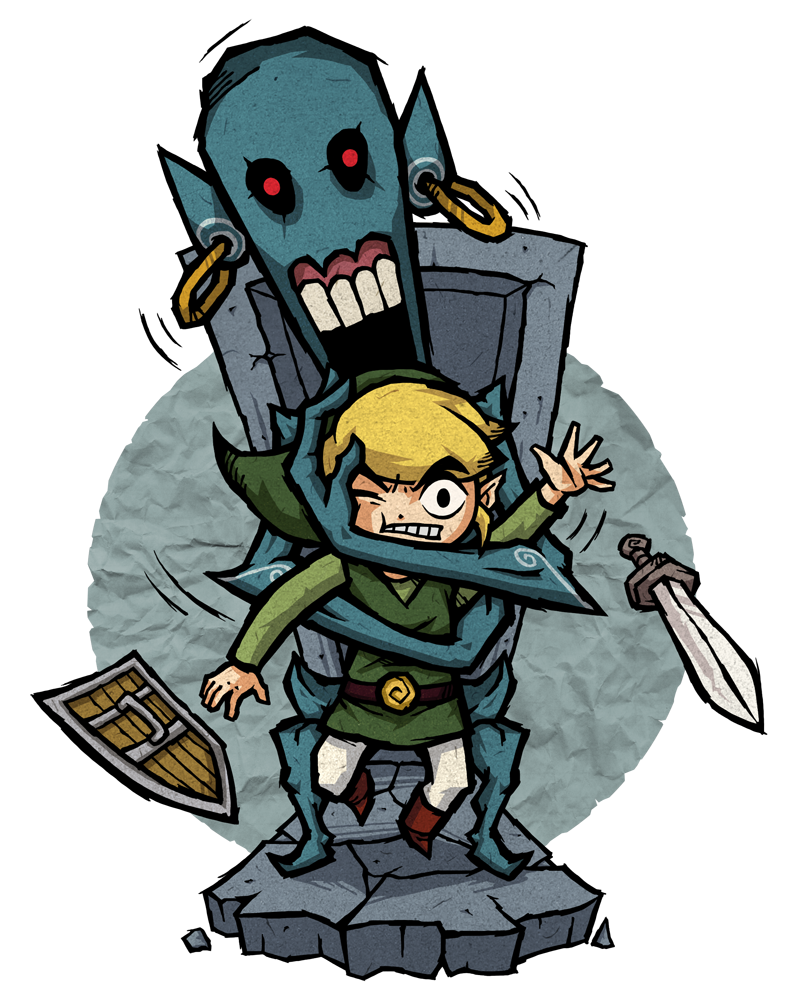
You pass through the massive vaulted oak gate into a tiny courtyard. A derro sits on the edge of a circular fountain covered in blue tile. She idly strokes the water and the several fat carp in it. “Welcome to the Desert of the Real,” she murmurs. An identical gate leads out across from you.
Derro (and their creator/biographer, Richard Sharpe Shaver) seem to have a lot of overlap with stereotypical paranoid schizophrenia - hearing voices, conspiracy paranoia, anonymous and sinister monitoring by menacing organizations. While reading up on it, I came across this article, which had a few interesting bits:
“[A] fairly common experience with regards to the voices is that they tell the schizophrenic to do certain things. Clinically, these are referred to as “command hallucinations”, and in some cases they can cause significant problems. The voices may tell the schizophrenic to harm or kill himself/herself or to harm someone else. Because the voices seem very real, they can be very compelling, making it difficult for the schizophrenic to resist acting on the command.”
“[A] fairly common experience with regards to the voices is that they tell the schizophrenic to do certain things. Clinically, these are referred to as “command hallucinations”, and in some cases they can cause significant problems. The voices may tell the schizophrenic to harm or kill himself/herself or to harm someone else. Because the voices seem very real, they can be very compelling, making it difficult for the schizophrenic to resist acting on the command.”
“Often the voices are commenting on the schizophrenic’s thoughts or actions. And to make it even more distressing, the voices may be threatening or disparaging. Sometimes the voice or voices are familiar, but this is not always the case.”
These could easily be describing a relationship between a player (or GM) and a PC. Obviously there is a difference - a PC will not in any way struggle against the player as it is a fictional being - but the similarity is a little compelling. This leads us to wonder what other differences there are, if any; without any differences, a derro (or anyone taking Conspiracy Pills) is identical to an unaffected PC.
One major difference seems to be that in a majorly oral game, spoken word actually defines the world and the actions taken in it, while in real life the problem for people with this illness is that the voices are generally in conflict with reality.
Real World:
Voice says one thing -> Reality says different thing -> Choose: Accept voice as fact, or Use sense(s) to test/reject
One major difference seems to be that in a majorly oral game, spoken word actually defines the world and the actions taken in it, while in real life the problem for people with this illness is that the voices are generally in conflict with reality.
Real World:
Voice says one thing -> Reality says different thing -> Choose: Accept voice as fact, or Use sense(s) to test/reject
Game World:
Voice says one thing -> Reality says different thing -> Choose: Accept voice as fact, or Use sense(s) to test/reject
Voice says one thing -> Reality says different thing -> Choose: Accept voice as fact, or Use sense(s) to test/reject
PCs have nothing to appeal to when the GM says “There is a talking skeleton in the room” or “You just killed three orcs” to tell whether or not this is true. It must be accepted as fact. This puts the GM in a powerful position. Social contract and all that.
How to use the supposed reliability of the GM’s spoken word to engender the sort of paranoia that derro experience/create?* I’m thinking about a derro dungeon that shifts when the voices stop telling you it’s the same.
How to use the supposed reliability of the GM’s spoken word to engender the sort of paranoia that derro experience/create?* I’m thinking about a derro dungeon that shifts when the voices stop telling you it’s the same.
YOU NEVER ENTER THE SAME ROOM TWICE
You pass through the massive vaulted 1oak gate into a tiny courtyard. A derro sits on the edge of a 2circular fountain covered in 3blue tile. She idly strokes the water and the several fat 4carp in it. “Welcome to the Desert of the Real,” she murmurs. An identical gate leads out across from you.
1- elm, ebony, stone, silver, oat, broken, etc
2- round, regular, silver, walled, cursed, large, etc
3- teal, cerulean, black, jale, bloody, chrome, etc
4- koi, goldfish, mantas, jellyfish, children, piglets, etc
1- “Fire, walk with me.”
2- “What’s the frequency, Kenneth?”
3- “I think I left the air loom on again.”
4- “Millennium Hand and Shrimp.“
5- “Been there a half an hour, I want to come home soon.“
6- “Twenty First Century Schizoid Man.“
Roll a d4 and a d6 as PCs enter. Pick a different word off the list you rolled and use that instead. Cross them off as you go.
Use the d6 to pick which clever reference the derro greets the PCs with.
The idea is to use the repetition and lameness of boxed text as a vehicle for weird shenanigans. Ideally the alterations to the environs lean towards unheimlich, and could be longer than a single word. Indeed, Scrap’s list of bizarre farm encounters would be perfect if the derros were invading Agricola.
Use the d6 to pick which clever reference the derro greets the PCs with.
The idea is to use the repetition and lameness of boxed text as a vehicle for weird shenanigans. Ideally the alterations to the environs lean towards unheimlich, and could be longer than a single word. Indeed, Scrap’s list of bizarre farm encounters would be perfect if the derros were invading Agricola.
Any particular point is lacking: a general aura more than a certain focus. The dull repetition of bland text becomes a mantra of madness.
(Rant: There is no object permanency in a game world. Every piece of the setting is like a twist on Descartes: “I am being described, therefore I am.” Goblin corpses disappear when you leave the room. Henchmen wink out of existence the second you stop actively thinking about what is in their backpack, only to shudder back to life when you decide you need a monster distraction. This is true of geography as well - the entire surface of the planet is gone for the duration of your dungeon delve, or perhaps in a mental quantum superstate.)